SERP-Based Keyword Clustering
Turn thousands of keywords
into a content strategy.
Pull every keyword a competitor ranks for, group them by shared search intent using real SERP data, and walk away with a complete roadmap of exactly what to write — and what one article can rank for.
Start clustering freeWhat's inside
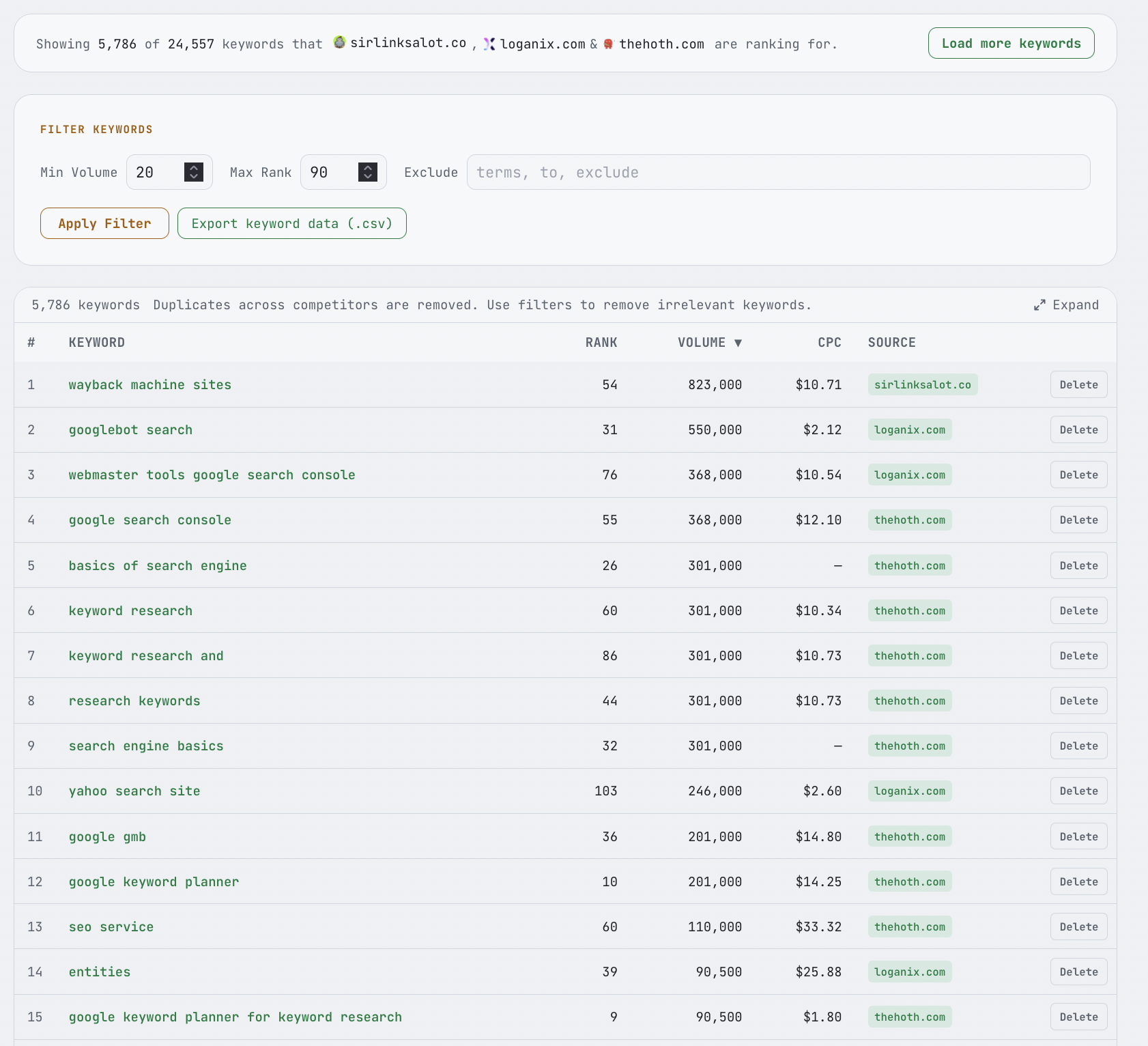
Competitor Keyword Discovery
Enter any competitor's domain and pull every keyword they rank for — in seconds. Instead of guessing what to write next, you can see the exact topics that are already driving them traffic.
We query live ranking data for the domain you enter and return hundreds or thousands of keywords with their positions, search volume, and difficulty. It's the fastest way to reverse-engineer a competitor's entire content strategy.
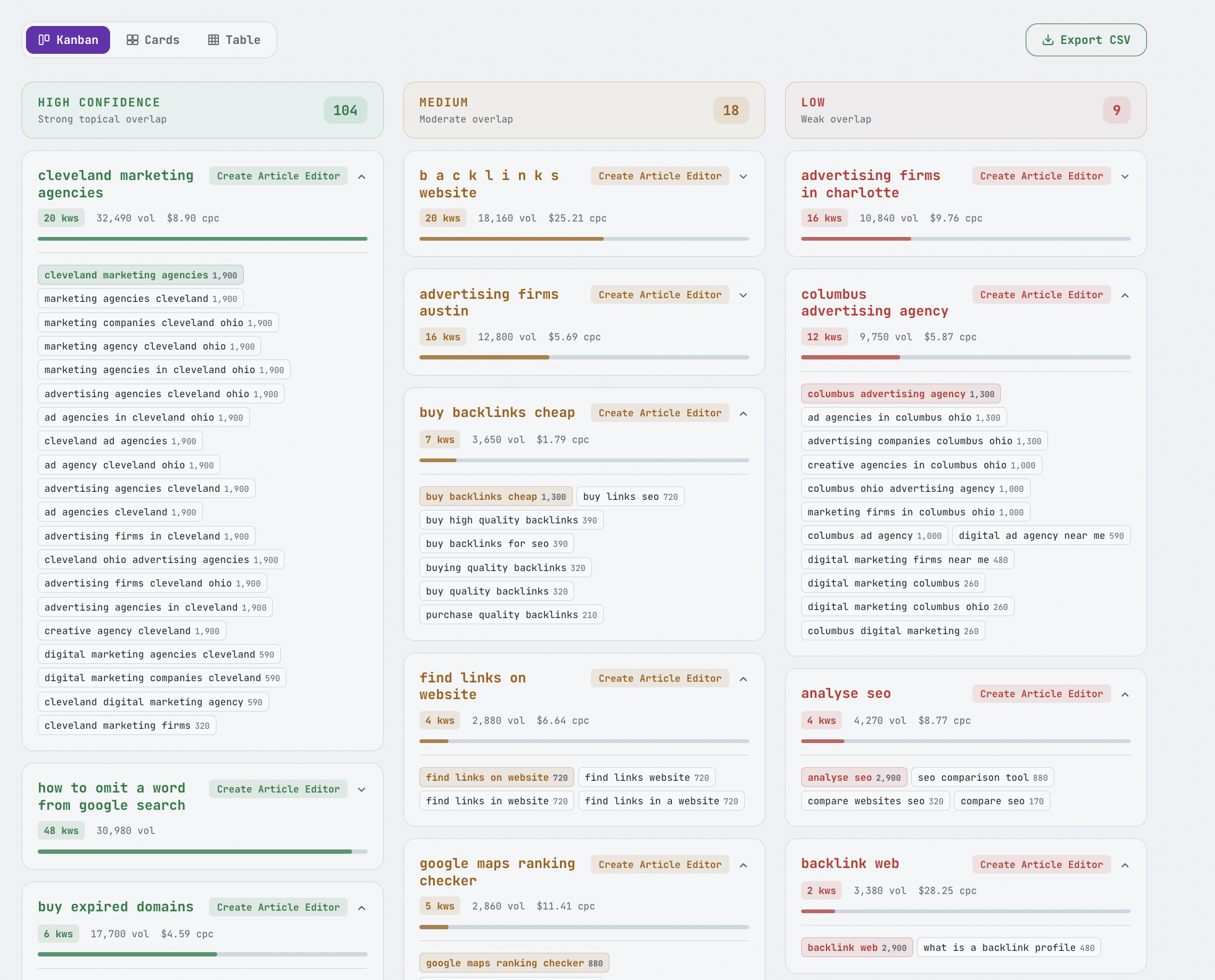
SERP Overlap Clustering
Most keyword tools group keywords by topic similarity. We group them by which ones share the same Google search results — because that's what actually tells you which keywords can be targeted on one page.
Two keywords belong in the same cluster if Google shows them the same results. That means one article can rank for both. Our clustering algorithm identifies these overlaps so you can build fewer, more powerful pages instead of spreading yourself thin.
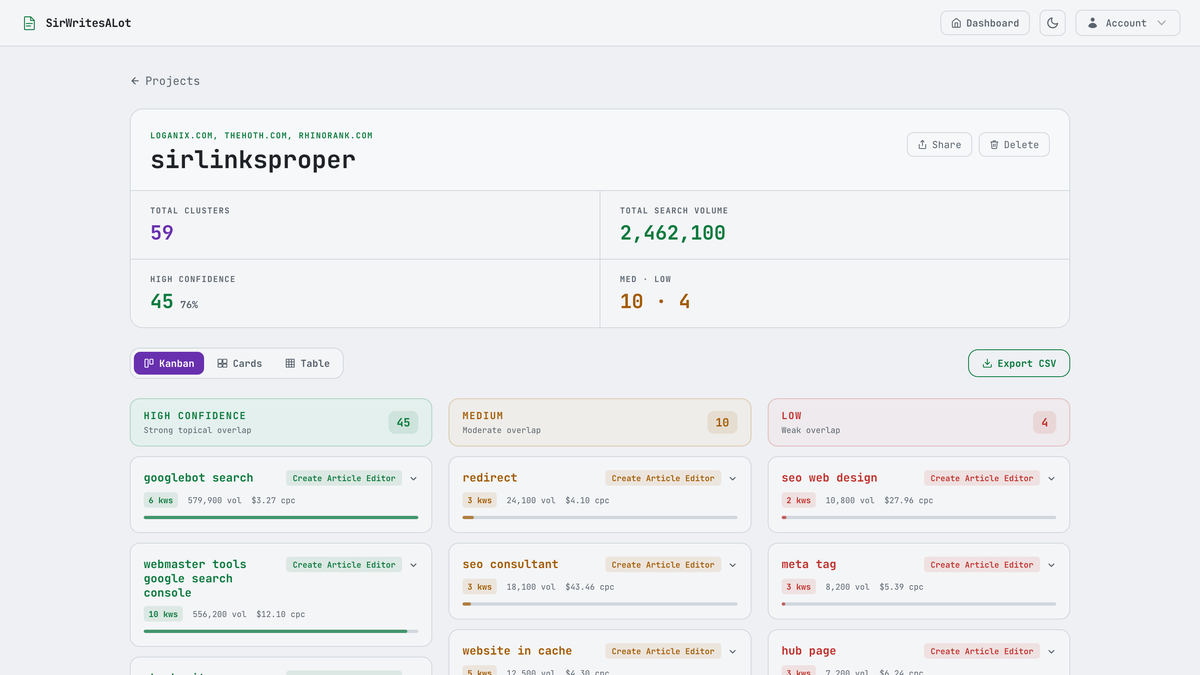
Kanban, Card & Table Views
View your clusters the way that makes sense for how you work. Switch between a kanban board for planning, cards for an overview, or a table for sorting and filtering through the data.
Each view shows the same underlying data — cluster name, keyword count, average volume, average difficulty — but lets you interact with it differently. The kanban view is especially useful for moving clusters through a content workflow.
Export Clusters
When your clusters are ready, export the full dataset for your content team, a spreadsheet, or a client deliverable. Everything is packaged and ready to hand off.
Exports include all cluster names, keywords, search volumes, difficulty scores, and SERP overlap data in a clean format. Use it to build a content calendar, brief writers, or present a keyword strategy to a client.